


On 22 October, the XVII International Scientific and Technical Conference “Innovations in Shipbuilding and Ocean Engineering” was held at the Admiral Makarov National University of Shipbuilding. Over the years, the conference has become a well-established forum for the scientific and professional community, bringing together representatives of academia, research, industry, and public institutions to address current challenges and discuss prospects for the development of the maritime sector. This year, the conference welcomed participants from Ukraine, Poland, Georgia, Estonia, Latvia, Germany, the Netherlands, and China.
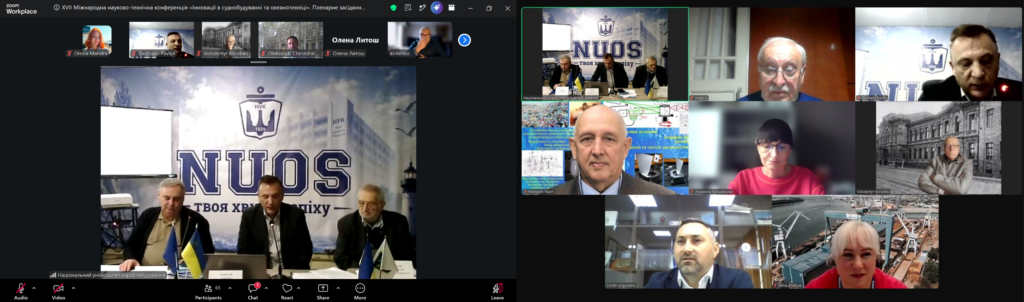
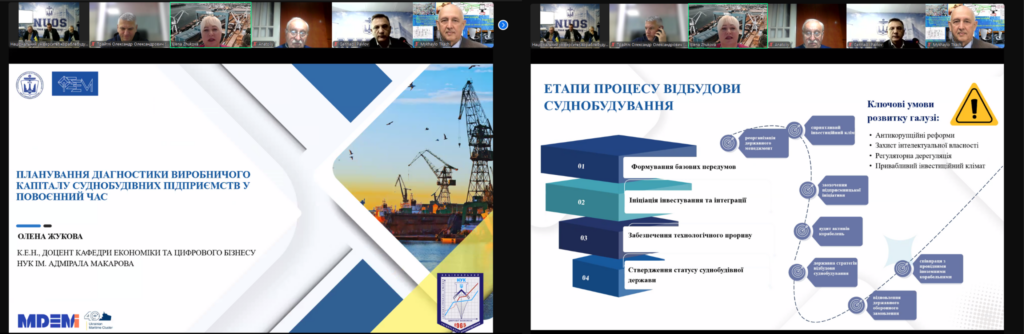
During the plenary session, Olena Zhukova, Executive Director of the Ukrainian Maritime Cluster, delivered the presentation “Planning Diagnostics of the Production Capital of Shipbuilding Enterprises in the Post-War Period.” The research focused on the post-war recovery of Ukraine’s shipbuilding industry, the transfer of innovative technologies, and the application of relevant international experience to support the sector’s recovery and further development.
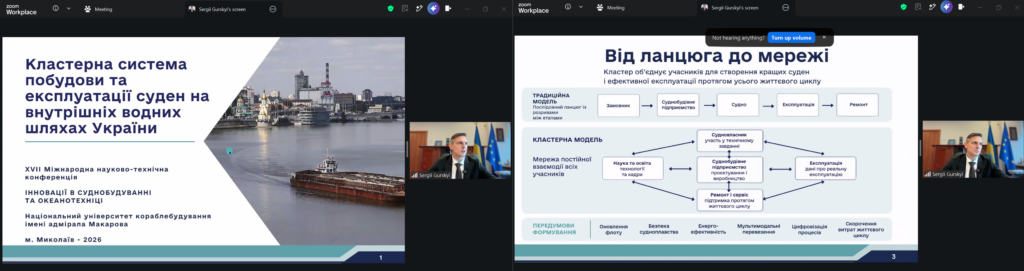
Among the key speakers at the plenary session was Serhii Hurskyi, Head of the State Service for Maritime, Inland Waterway Transport and Shipping of Ukraine, who presented “The Structure of a Cluster-Based System for the Construction and Operation of Transport Vessels on Ukraine’s Inland Waterways.” The presentation addressed modern approaches to the development of waterborne transport and cooperation among industry stakeholders. The discussion also covered the future of shipbuilding, emerging approaches, and new opportunities for the sector’s development.
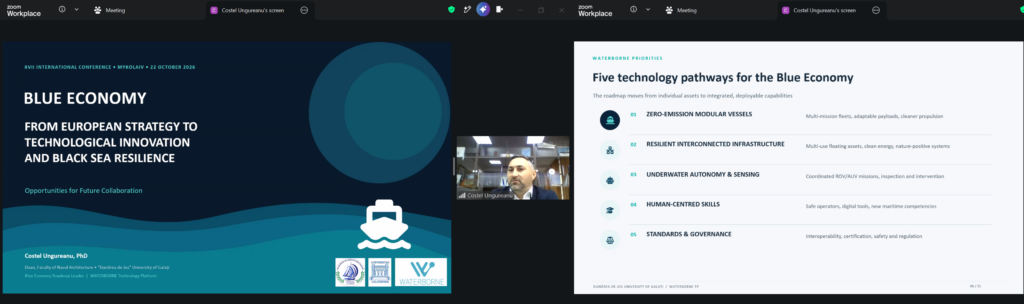
International experts also joined the conference at the invitation of the University. Costel Ungureanu, Dean of the Faculty of Naval Architecture at Dunărea de Jos University of Galați, Romania, and Vice-Chair of TRIG Blue Economy & Roadmap Leader, Waterborne TP, contributed to the discussion on Blue Economy, technological innovation, and the resilience of the Black Sea region.
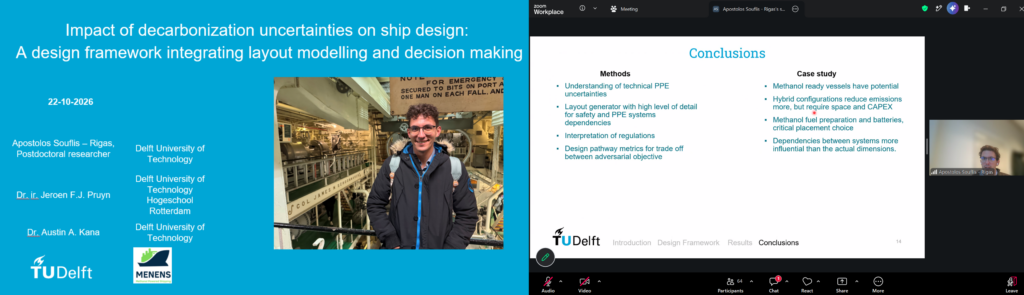
Another key focus of the discussion was the decarbonization of shipping and its implications for the future of ship design. Apostolos Souflis-Rigas, researcher at Delft University of Technology, the Netherlands, presented “Impact of Decarbonization Uncertainties on Ship Design,” addressing how uncertainties associated with decarbonization can influence design decisions and shape future ship concepts.
The conference once again highlighted the importance of international cooperation and coordinated efforts across academia, industry, and public institutions in advancing shipbuilding and maritime technologies and supporting the recovery of Ukraine’s maritime economy.
The Ukrainian Maritime Cluster appreciates its long-standing cooperation with the Admiral Makarov National University of Shipbuilding and the University’s continued commitment to maintaining this important professional platform, fostering research and innovation, and strengthening international cooperation across the maritime sector.